Getting People Off Their Chairs — Lessons from the Ecological Corridors & Crossings Forum
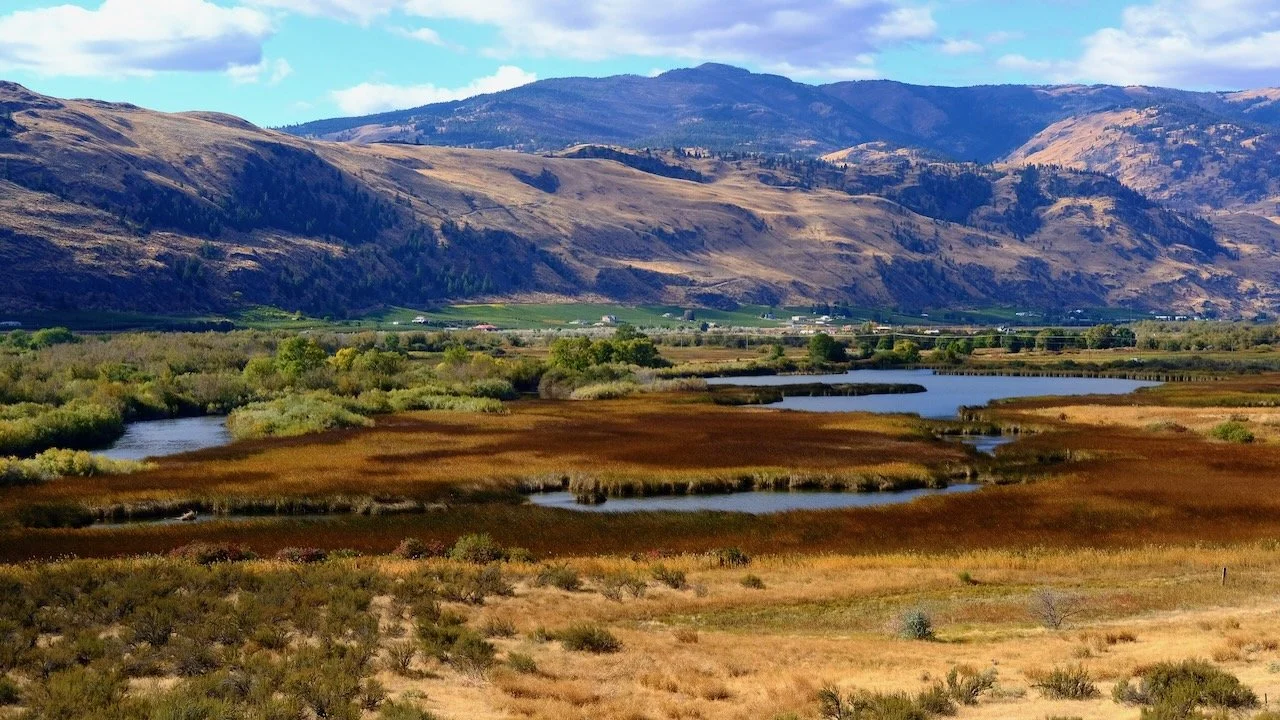
South Okanagan Wildlife Management Area, north of Osoyoos Lake.
The easiest thing to do when you're designing a three-day forum is to put people in a room and talk at them. Panels. Presentations. Q&A. It's familiar, it's low-risk, and it almost never produces anything worth the effort getting there.
For the Ecological Corridors and Crossings Forum in Kelowna last year, I wanted to try something different. The format was the thing I was most uncertain about.
We had fifty participants. First Nations representatives, government agencies, NGOs, academic researchers, community organisations. The people whose knowledge and relationships actually make corridors work in BC's Southern Interior. Getting that group in a room together was an achievement in an of itself. The question was what to do with them once they were there.
The Bus
We started the forum not in a conference room but on a bus. Half a day on the road, visiting two wildlife crossings and an ecological corridor, walking the land, listening to ecologists and Syilx Nation members talk about the ecology, the engineering, and the cultural significance of the work.
I'd worried the field component would feel like a detour. It wasn't. It was the foundation. By the time we sat down together the next day, people had shared something. A place, a perspective, a conversation on a bus that no agenda item could have manufactured. The room felt different because people had been somewhere together first.
Priya Parker writes about the power of a threshold, the moment of crossing from ordinary life into the gathering. The bus was our threshold, and it did it worked better than expected.
The closing.
On the final morning, I ran a modified version of 25/10 Crowd Sourcing, a Liberating Structure where participants rapidly generate and prioritise bold ideas. I was confident going in. The energy in the room by day three was exactly what you want it to be. People were relaxed, direct, genuinely glad to be doing the work together.
The results were good. Clear, actionable 24-month priorities that reflected the range of knowledge and interest in the room. That happens when the process has spent two and a half days building trust before you ask the group to produce anything.
What I'd do differently.
Priya Parker also talks about the facilitator as a benevolent dictator. Someone who protects participants by making clear, sometimes uncomfortable decisions about how the time gets used. I believe in this. I don't always practise it.
The Kelowna group was forthcoming and direct. We didn't lose much to vagueness or avoidance. But there was a brief stretch on day two, mid-morning, during the discussion of data sovereignty when I let the group conversation run a little long. The content was valuable, it set the mapping exercise up for success. It’s just that the conversation went a little long and I could feel the room start to drift. Phones came out. Two people stepped into the hall. Managing flow is a skill that hinges on who is in the room, and it’s a skill that I am always working on. Being the person who says that's a good place to stop, even when the conversation is good, is part of what it means to hold a room well. I didn't do it cleanly in Kelowna.
A note on format.
If you take nothing else from this post, take this. Get people off their chairs. Walk somewhere together. Visit the land the work is actually about. I've learned this in a number of different settings, from cycling with friends to driving with my kids. The conversations that happen in motion, on a bus, on a trail, at a crossing, are different from the conversations that happen in a room. Not better in every way. Different in the ways that matter most for building the kind of trust that produces real agreements.
The forum format is a tool, use it like one.
